ATTACK THE BLOCK IS A SUCCESSFUL HYBRID OF ACTION AND SCI-FI. DISCUSS, WITH REFERENCE TO THE FINAL SCENE.
[12 MARKS]
Attack The Block could be categorised as either an action or sci-fi film because it contains the codes and conventions of each. These are both examples of genre, which is a way of classifying media based on its individual characteristics - usually to the end of better marketing the media product in question. There is a slight issue with the statement at hand in that, whilst this film is indeed a hybrid - a media product that doesn't quite fit into one genre in particular - it spans more than just the two genres mentioned. Attack The Block is an example of a hybrid of three different genres, those being action, sci-fi and horror.
We are able to discuss the lengths to which each genre shows up in Attack The Block by first taking a look at the mise-en-scene. Colour is a very important aspect of this film; it can convey a great deal of meaning and influence a reader in certain ways. This film uses a noticeable amount of blue lighting - a popular convention of sci-fi films and media, and an effect created with coloured gels. It gives the events of the film an ethereal quality, which contrasts well with the down-to-earth location that was chosen for its setting. In the scene where Moses leaps over the aliens, the multicoloured lighting effects convey this same feeling. There are, however, conventions of other genres conveyed through colour in this film - although a little bit more subtle. In one shot, we see that Pest's shoes are black and yellow along with the warning labels on his firework rockets. Black and yellow are aposematic colours, usually seen conveying danger in nature (if you've ever noticed the colours of bees and wasps). In action, black and yellow are often used to convey danger and are very noticeable to top it off. Action conventions can also be spotted in further props, such as the sword Moses carries. However, the alien head strapped to his back could be seen as both an action and sci-fi convention. It paints Moses, who carries it, in a heroic light whilst also being unsettling to look at. One feature in particular that can be attributed solely to action is the use of the Union Jack that essentially saves Moses' life. In action, we can often see a strong sense of patriotism - many American action films feature the president of their country or a good many flags. It's interesting to see the Union Jack being used in this way, almost as if to parody or comment on the patriotism we see in Hollywood blockbuster action films.
Sound is used in this film to great effect, and it is here where we find the boldest horror conventions. Diegetic effects in horror films can create or break tension and really mould the experience a viewer has with the media product. The most effective example of this convention is when Moses steps into his apartment. The sounds the door makes are heightened to build tension and, in the crucial moment, the lighter won't light - this is when the sound design tells its own story. The loud sounds of the lighter combined with the closed in, claustrophobic camera create a distinct feeling of tension that could either be attributed to horror or sci-fi. The music fits action conventions quite closely; it's variable throughout the last few minutes to allow characters to speak and dramatic moments to happen, but there is a crescendo at the very end paired with chanting from outside the van Moses and Pest are sat it. It influences viewers' emotions in a way often identified in action films, with the glory of defeating monsters at the very end. Attack the block is, however, unconventional in this regard as well. The cut to silence and black at the very end of the film, before the credits, will likely leave viewers unsatisfied and questioning.
The editing of Attack The Block is crucial to the overall feeling of the film. It uses a particular sequence of slow motion wherein Moses leaps over the aliens; this use of heroic movement combined with the slowed down pace is blatantly attributed to the action genre. There's an invisible cut in this sequence when an alien runs by the camera, contributing to the overall smoothness and epic scale of this sequence. Quite a bit of the editing contributes to the element of sci-fi in Attack The Block, such as the blue tint to the film, the alien teeth effect (notably, a bright cyan-blue) and the strobe lighting on the stairwell as Moses hurtles down it. These combine into a hybrid, as has been said, between sci-fi and action.
The camerawork in Attack The Block is very reminiscent of action films on the whole, certainly in the shot in which Moses is stood in central composition with leading lines framing him on either side. It's very heroic and certainly looks like action. The film definitely feels more like an action than any other genre once you get into all of the camerawork, for example: lots of static wide shots that zoom inward are used to create a sense of the epic and exciting. This kind of larger-than-life effect is attributed to action. The film also uses closeups, although sparingly, for moments of emotion or reaction that give a sense of raw honesty. They contrast well with the ultra-action wide shots and influence the viewer into sympathising with the characters. There's a scene nearer the end in which the camera tracks downwards to reveal Moses hanging from a Union Jack flag. This downward motion, as well as revealing his position, creates the illusion of movement that grips attention and feels quite action-oriented. There is a technique used that could be considered a horror convention - the focus pull. One famous example of a focus pulls in Jaws, a very popular horror film.
To conclude, Attack The Block is most definitely a hybrid - one between three genres. Action conventions are very bold and noticeable, which influences the feel of the film very distinctly towards the action genre. Deborah Knight's theory on audience pleasure states that audiences enjoy predictability, so long as the journey to the conclusion is interesting. Action films may be predictable - we knew that Moses would triumph at the end - but the way we got there was interesting enough to carry the film to successful status. In fact, the ending dodged total predictability by having the open-ended and bittersweet arrests at the end (more a convention of sci-fi or horror). There is certainly, on that topic, no denying the sci-fi editing techniques or the telltale sounds and closeups of a horror film. All three work together in a blend to convey a very unique story that anyone would be hard-pressed to replicate. Hybrids may not be the best way forward in a marketing sense, but makes for interesting viewing.
NOTES FOR LATER, PLEASE IGNORE:
is there a reference to the shining?? when Ron (nick frost) opens the door???
Thursday, 27 February 2020

Tuesday, 25 February 2020
GENRE THEORY
NOTES
Donnie Darko genre bending?
is starwars a western?
desert, standoffs
hero, good vs. evil
clothing?
genre is massively important in film industry - marketing, putting in boxes. every film that's released, have you seen that new horror film? categorised, organised, find and watch and choose
genre audience connection, choose what to watch , niche audiences to market to - promoting is all about safety because films are expensive - you'll at least appeal to someone
the expanse on Netflix. good
hybrids break boundaries
codes and conventions
things normally found in that genre
things that create meaning
codes - technical and symbolic, the thing
technical - equipment being used to tell a story, how it's made (shaky camera, jumpscares)
symbolic - under the surface, moods and feelings (creepy feeling, sad feeling)
music fits both tech and symbolic
conventions - accepted way of doing something generally, is the thing typical
eg. magazines look like magazines, newspapers look like newspapers etc.
how it's conventionally used vs. how it is used etc. (shaky camera is a convention of horror)
western codes
browns, yellows, oranges
costumes
horses
dusty, desert, saloons
American Wild West
western conventions
why do we watch them?
human revenge stories, lawless, about the narrative
redefining the genre, moral grey areas, not good vs. evil, more realistic
our genres
action, scifi, comedy
attack the block is a hybrid
conforms and goes against
no love interest character
group (although Moses is the leader, protagonist)
set in the present, set in England, not high budget
theory
universities, professors etc
nobody planned the media, sat down and said media is going to be this
organic way over years
oh god look at this thing we've made
tells us about human beings because we did it
categorising and breaking down
for future media
important theorists
Daniel chandler - genres are a set of elements shared between texts/films
ATB has this - multiple genre conventions
Deborah knight - satisfaction is guaranteed with genre, prolonged anticipation for things you know are going to happen - safety net, you know what's going to happen and seeing how we get there is pleasurable
attack the block ends like an action film, he beats the monsters. conventional to action, not scifi. BUT we get there in a different way and he's arrested. unconventional to action. Moses plot armour
Steve neale - no pleasure without difference, pleasure is derived from repetition and difference - you like to see the same things in a genre but done in different ways - pleasure is derived from the differences
ATB is unconventional - antihero mugging someone at the start. gets arrested at the end, no clean victory. no scientist character but you do have the posh guy, realistic in some regards/respects
Jonathan culler - connection between creator and audience, certain expectations to meet, allowing compliance and deviation - can change things or repeat them to establish a connection with your audience and speak to them through your film (you are a reader if you watch a film) - you expect things in the unspoken contract, the creator delivers on that expectation or subverts it - like a conversation
ATB marketed as an action, not a sci-fi. wider audience for action. its also a social commentary/comedy - not technically an action film, peril isn't throughout, moments of comedy without peril
ATB is low budget and British, and independent, not just trying to tick boxes - social commentary usiual;y found in British independent films rather than Hollywood (council estate commentary, race commentary) see: Edgar wright films. people were probably disappointed with the lack of action, sci-fi etc because it did bad at the box office
roles - who has the hero? antihero? damsel in distress? villain? etc.
TYING IT ALL UP
very rough summary of ATB genre.
ATB is a hybrid of action, horror, comedy, sci-fi and social commentary. It was marketed mostly as an action film, however despite this it has elements mores of comedy and social commentary. it has conventions of each genre, however subverting others. For example, it has fight scenes like an action film would have. We can find codes of the action genre, such as blue lighting which is created by using gel thingies slotted over the camera lens. It also has a male lead, which is very conventional to the genre. The presentation of masculinity is a Whole Thing in action films but I won't go into it yet.
It uses tracking shots along corridors which is a big convention of the sci-fi genre.
It also uses flickering lights, which works for either sci-fi or horror. it has moments of comedy as well which play into conventions of both action and comedy - action films often have a few jokes peppered in. ATB also has jumpscares, a solid convention of the horror genre that is sometimes shared with both action and sci-fi. characters being picked off one by one, when they're alone, is also a convention of the horror genre. big monsters are a convention of horror and action, but sometimes action films (like war of the worlds) are based around alien invasions.
ATB conforms to each of these genres a bit, but subverts certain parts of them all as well. it's a hybrid, which are notoriously difficult to market and don't tend to do too well. people often leave feeling quite disappointed with the film, because they had certain expectations that were left unfulfilled. they may feel, as culler says, that their 'contract' was not honoured.
Donnie Darko genre bending?
is starwars a western?
desert, standoffs
hero, good vs. evil
clothing?
genre is massively important in film industry - marketing, putting in boxes. every film that's released, have you seen that new horror film? categorised, organised, find and watch and choose
genre audience connection, choose what to watch , niche audiences to market to - promoting is all about safety because films are expensive - you'll at least appeal to someone
the expanse on Netflix. good
hybrids break boundaries
codes and conventions
things normally found in that genre
things that create meaning
codes - technical and symbolic, the thing
technical - equipment being used to tell a story, how it's made (shaky camera, jumpscares)
symbolic - under the surface, moods and feelings (creepy feeling, sad feeling)
music fits both tech and symbolic
conventions - accepted way of doing something generally, is the thing typical
eg. magazines look like magazines, newspapers look like newspapers etc.
how it's conventionally used vs. how it is used etc. (shaky camera is a convention of horror)
western codes
browns, yellows, oranges
costumes
horses
dusty, desert, saloons
American Wild West
western conventions
why do we watch them?
human revenge stories, lawless, about the narrative
redefining the genre, moral grey areas, not good vs. evil, more realistic
our genres
action, scifi, comedy
attack the block is a hybrid
conforms and goes against
no love interest character
group (although Moses is the leader, protagonist)
set in the present, set in England, not high budget
theory
universities, professors etc
nobody planned the media, sat down and said media is going to be this
organic way over years
oh god look at this thing we've made
tells us about human beings because we did it
categorising and breaking down
for future media
important theorists
Daniel chandler - genres are a set of elements shared between texts/films
ATB has this - multiple genre conventions
Deborah knight - satisfaction is guaranteed with genre, prolonged anticipation for things you know are going to happen - safety net, you know what's going to happen and seeing how we get there is pleasurable
attack the block ends like an action film, he beats the monsters. conventional to action, not scifi. BUT we get there in a different way and he's arrested. unconventional to action. Moses plot armour
Steve neale - no pleasure without difference, pleasure is derived from repetition and difference - you like to see the same things in a genre but done in different ways - pleasure is derived from the differences
ATB is unconventional - antihero mugging someone at the start. gets arrested at the end, no clean victory. no scientist character but you do have the posh guy, realistic in some regards/respects
Jonathan culler - connection between creator and audience, certain expectations to meet, allowing compliance and deviation - can change things or repeat them to establish a connection with your audience and speak to them through your film (you are a reader if you watch a film) - you expect things in the unspoken contract, the creator delivers on that expectation or subverts it - like a conversation
ATB marketed as an action, not a sci-fi. wider audience for action. its also a social commentary/comedy - not technically an action film, peril isn't throughout, moments of comedy without peril
ATB is low budget and British, and independent, not just trying to tick boxes - social commentary usiual;y found in British independent films rather than Hollywood (council estate commentary, race commentary) see: Edgar wright films. people were probably disappointed with the lack of action, sci-fi etc because it did bad at the box office
roles - who has the hero? antihero? damsel in distress? villain? etc.
TYING IT ALL UP
very rough summary of ATB genre.
ATB is a hybrid of action, horror, comedy, sci-fi and social commentary. It was marketed mostly as an action film, however despite this it has elements mores of comedy and social commentary. it has conventions of each genre, however subverting others. For example, it has fight scenes like an action film would have. We can find codes of the action genre, such as blue lighting which is created by using gel thingies slotted over the camera lens. It also has a male lead, which is very conventional to the genre. The presentation of masculinity is a Whole Thing in action films but I won't go into it yet.
It uses tracking shots along corridors which is a big convention of the sci-fi genre.
It also uses flickering lights, which works for either sci-fi or horror. it has moments of comedy as well which play into conventions of both action and comedy - action films often have a few jokes peppered in. ATB also has jumpscares, a solid convention of the horror genre that is sometimes shared with both action and sci-fi. characters being picked off one by one, when they're alone, is also a convention of the horror genre. big monsters are a convention of horror and action, but sometimes action films (like war of the worlds) are based around alien invasions.
ATB conforms to each of these genres a bit, but subverts certain parts of them all as well. it's a hybrid, which are notoriously difficult to market and don't tend to do too well. people often leave feeling quite disappointed with the film, because they had certain expectations that were left unfulfilled. they may feel, as culler says, that their 'contract' was not honoured.
Monday, 24 February 2020
M1 - SWOT ANALYSIS

CROAK
A die-hard journalism student, determined to write a big story and get into the business, latches onto every small thing life throws at her. Fortunately, this small thing in particular grows and grows - until she realises she might just be in over her head. What else to do from there but dive right in, headfirst?
This idea seems the strongest and most interesting to me - I'll be taking this one forward into development.
A die-hard journalism student, determined to write a big story and get into the business, latches onto every small thing life throws at her. Fortunately, this small thing in particular grows and grows - until she realises she might just be in over her head. What else to do from there but dive right in, headfirst?
This idea seems the strongest and most interesting to me - I'll be taking this one forward into development.

STUFFED
A witch takes a trip to the big city when his father dies to make his fortune. His intention is to build up the taxidermy business they shared in the village he just left, but life all on his own in a city is scarier than he thought it would be. With some help from new friends, he finds his footing.
This idea is interesting but there perhaps isn't enough drama.

PART-TIME CUPID
A self-obsessed student accidentally discovers a talent for matchmaking people around her. Unbeknownst to her, somebody is watching her do this - and that someone isn't what you'd expect. Follow the bizarre life of Violette Pith as she navigates a world driven by love, which has never interested her before.
I like this idea but it calls for quite a large cast and feels like a longer story than regular BBC3 drama series.
Thursday, 13 February 2020
THREE IDEAS DEVELOPMENT

IDEA 1: CROAK
A die-hard journalism student, determined to write a big story and get into the business, latches onto every small thing life throws at her. Fortunately, this small thing in particular grows and grows - until she realises she might just be in over her head. What else to do from there but dive right in, headfirst?
We follow our protagonist, Fen Marsh, as she uncovers and unravels a mystery way larger than herself - it's something that eventually forces her to spend time with others and get to know them. It has themes of opening up, as opposed to keeping your thoughts and feelings to yourself. Her interaction with her brother at the start of the series is conveyed purely through texts and calls, in contrast with the end of the series wherein she'll be talking to others freely and making time for them.

IDEA 2: STUFFED
A witch takes a trip to the big city when his father dies to make his fortune. His intention is to build up the taxidermy business they shared in the village he just left, but life all on his own in a city is scarier than he thought it would be. With some help from new friends, he finds his footing.
Alister, our protagonist for this series, is a witch that can communicate with the dead. Taxidermy animals are his trade, which brings an element of comedy because they definitely talk to him. It also allows us to explore a magic system without the use of any effects in particular. This series would explore themes of anxiety, friendship and acceptance.

IDEA 3: PART-TIME CUPID
(accidentally wrote the wrong title on my mindmap)
A self-obsessed student accidentally discovers a talent for matchmaking people around her. Unbeknownst to her, somebody is watching her do this - and that someone isn't what you'd expect. Follow the bizarre life of Violette Pith as she navigates a world driven by love, which has never interested her before.
Violette is contacted by Cupid, a mysterious and supernatural figure (and possibly a god) that dislikes somebody doing their job for them. It will cover topics of love, meddling with others' business and sexuality - I want to teach people about asexuality and aromance, which means that you aren't interested in other people sexually or romantically, and the fact that it doesn't make you distant or confusing. Violette, who isn't interested in people, starts off stereotypically closed off from others but grows as a person throughout the show.
CASE STUDY - ATTACK THE BLOCK MARKETING
A BIT OF ADVERTISING THEORY
ABOVE THE LINE ADVERTISING
Advertising widely and to as many people as possible. You won't be able to control exactly who sees it and therefore may not be targeting your specific audience. eg. billboards, newspapers, banners
BELOW THE LINE ADVERTISING
Marketing targeted at specific people. This is much cheaper and you can do this if you know your audience - technology collects data on what people enjoy so that advertising can be targeted directly.
ONTO OUR CASE STUDY
ATTACK THE BLOCK
WRITER: Joe Cornish
DIRECTOR: Joe Cornish
PRODUCTION COMPANIES:

RELEASE DATE: 13th May 2011
CAST MEMBERS:

DISTRIBUTION COMPANIES: Optimum Releasing (UK), Sony Pictures Releasing (US)
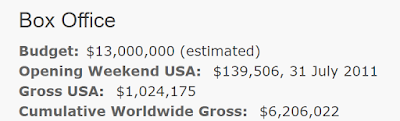
BOX OFFICE:
ATTACK THE BLOCK PROMOTION
The film was promoted as a blend of sci-fi, comedy and horror. This was likely to reach the most honest audience and play into more niche markets. They put out some really stylish posters, which gave off quite different vibes. The first evokes more of a sci-fi feeling:
Whereas this poster feels more like an action film:


ABOVE THE LINE ADVERTISING
Advertising widely and to as many people as possible. You won't be able to control exactly who sees it and therefore may not be targeting your specific audience. eg. billboards, newspapers, banners
BELOW THE LINE ADVERTISING
Marketing targeted at specific people. This is much cheaper and you can do this if you know your audience - technology collects data on what people enjoy so that advertising can be targeted directly.
ONTO OUR CASE STUDY
ATTACK THE BLOCK
WRITER: Joe Cornish
DIRECTOR: Joe Cornish
PRODUCTION COMPANIES:

RELEASE DATE: 13th May 2011
CAST MEMBERS:

DISTRIBUTION COMPANIES: Optimum Releasing (UK), Sony Pictures Releasing (US)
BOX OFFICE:

ATTACK THE BLOCK PROMOTION
The film was promoted as a blend of sci-fi, comedy and horror. This was likely to reach the most honest audience and play into more niche markets. They put out some really stylish posters, which gave off quite different vibes. The first evokes more of a sci-fi feeling:


Whereas this poster feels more like an action film:

I think the marketing could have been more focused on one genre to maximise sales, however I personally love both posters. The second really reminds me of comics or visual novels like the walking dead - the characters are really clear and it's brimming with detail. Posters can be digital or traditional media, perhaps hung up around cities or cinemas. It's an example of below-the-line marketing.
The reviews of a film are usually a good indicator of whether or not people feel compelled to see it - this review from the guardian rates the film at four stars:

It's a digital way of marketing the film, after its release so that people will take notice. It's above the line advertising, because anyone could see this.
The target market for this film was likely fans of primarily sci-fi and action. It was marketed as both, and the graphic novel style poster makes me think that perhaps sci-fi was the priority. However, the guardian review pegs it as an 'action-adventure comedy'.
Monday, 10 February 2020
P1 - ANALYSIS OF PRIMARY AUDIENCE RESEARCH
We created a survey to send out about our target audience, in order to collect data to inform our ideas. There were certain trends in the data we got back and that's what we're going to discuss today.
PSYCHOGRAPHICS

Psychographics are the generalisation of audience members to better cater to them.
THE SURVEY
The majority of our audience was:

White

Female

Straight
Summary
Our demographic is very straight and white because of the area we live in, and also likely because of the types of people that felt compelled to fill in the survey.
Conclusions
I would like to target more of a niche audience.
PSYCHOGRAPHICS

Psychographics are the generalisation of audience members to better cater to them.
THE SURVEY
The majority of our audience was:

White

Female

Straight
Summary
Our demographic is very straight and white because of the area we live in, and also likely because of the types of people that felt compelled to fill in the survey.
Conclusions
I would like to target more of a niche audience.
Thursday, 6 February 2020
P1 - ANALYSIS OF AUDIENCE FEEDBACK
PRACTICE PITCH NOTES
FOCUS GROUP FEEDBACK
CROAK
FOCUS GROUP FEEDBACK
CROAK
- Make the characters distinct.
- The comedy should definitely come from the weirdness of the situation but also the narrow-mindedness of Fen on her journey.
- Would watch it :)
Subscribe to:
Posts (Atom)